
Colonoscopy: Understanding Your Options for Colon Cancer Screening
June 18, 2026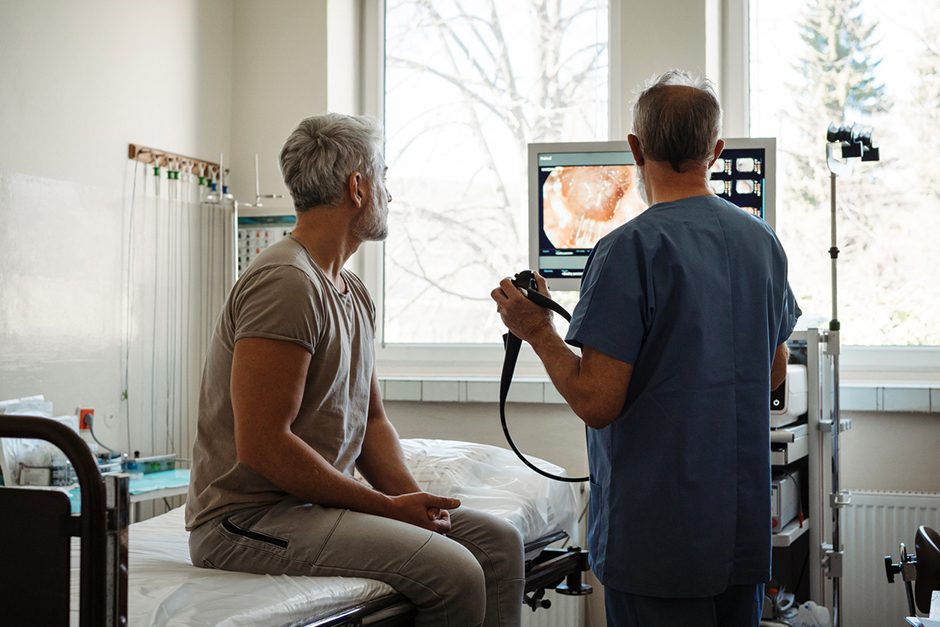
When it comes to preventing colorectal cancer, screening is one of the most important steps you can take for your health.
Colorectal cancer is the second leading cause of cancer-related deaths in the United States, but it is also one of the most preventable cancers. Screening can detect cancer early—when treatment is most effective—and in some cases, prevent cancer from developing altogether.
Many patients are familiar with at-home screening tests such as Cologuard®, but they may wonder how these tests compare to a colonoscopy. While both play a role in colorectal cancer screening, colonoscopy remains the gold standard because it not only detects problems but can also help prevent cancer before it starts.
What is a Colonoscopy?
A colonoscopy is a procedure that allows a gastroenterologist to examine the entire lining of the colon using a thin, flexible camera.
During the procedure, your physician can identify and remove polyps—small growths that may develop into cancer over time. Because these precancerous polyps can be removed immediately, a colonoscopy is both a screening and preventive tool.
Most patients are comfortably sedated during the procedure and can return home the same day.
What Is Cologuard®?
Cologuard® is an at-home stool-based test that looks for abnormal DNA and traces of blood that may be associated with colorectal cancer.
The test is convenient because it can be completed at home and mailed to a laboratory for analysis. However, it does not examine the colon directly and cannot remove polyps or confirm a diagnosis.
If a Cologuard® test comes back positive, a colonoscopy is still required to determine whether cancer or precancerous polyps are present.
Colonoscopy vs. Cologuard®
While both tests can be appropriate for certain patients, there are important differences.
Colonoscopy
- Directly examines the entire colon
- Detects and removes precancerous polyps during the same procedure
- Helps prevent colorectal cancer
- Typically needed only once every 10 years if results are normal
- Provides immediate diagnostic information
Cologuard®
- Tests stool for DNA changes and blood
- Does not examine the colon directly
- Cannot remove polyps
- Must be repeated every three years if results are normal
- Requires follow-up colonoscopy if results are positive
Why Colonoscopy Is Considered the Gold Standard
The biggest advantage of colonoscopy is that it can prevent cancer, not just detect it.
Many colorectal cancers begin as polyps that develop slowly over time. During a colonoscopy, these polyps can be found and removed before they become cancerous.
In addition, colonoscopy provides the most complete evaluation of the colon and can identify abnormalities that stool-based tests may miss.
For many patients, the peace of mind that comes with a thorough examination and a 10-year screening interval is well worth the preparation and procedure.
Who Should Be Screened?
The American Cancer Society recommends that adults at average risk begin colorectal cancer screening at age 45.
You may need a colonoscopy sooner or more frequently if you have:
- A family history of colorectal cancer
- A personal history of colon polyps
- Inflammatory bowel disease
- Certain inherited cancer syndromes
- Symptoms such as rectal bleeding, unexplained anemia, changes in bowel habits, or persistent abdominal discomfort
Your healthcare provider can help determine which screening option is best for you.
Don't Wait for Symptoms
One of the challenges of colorectal cancer is that it often develops without noticeable symptoms in its early stages.
That's why routine screening is so important. Detecting polyps or cancer early can significantly improve treatment outcomes and may even prevent cancer from developing in the first place.
Take the Next Step
If you're 45 or older—or have risk factors for colorectal cancer—now is the time to talk with your healthcare provider about screening.
A colonoscopy remains the most comprehensive way to detect and prevent colorectal cancer. By taking action today, you can protect your health for years to come.
To schedule a colonoscopy screening, contact UP Health System – Marquette Digestive & Liver (Marquette) at 906.449.3680, UP Health System – Marquette Surgical Associates (Bell) at 906.449.1666, or UP Medical Group – Portage General Surgery at 906.483.1040 (Portage). Visit uphealthsystem.com/digestive-health-liver to learn more.